For lenders, fintechs, and service providers operating in India, digital lending compliance is closely connected to customer communications. Borrowers receive disclosures, sanction details, statements, policy notices, recovery information, and other messages through email, SMS, and digital channels.
That creates a clear archiving challenge. If those communications are important for customer protection, dispute handling, and regulatory operations, businesses need a practical way to retain and retrieve them later.
This is not just a compliance issue. It is also commercial. When borrower communications are scattered across vendors and workflows, support costs rise, complaint handling slows down, and compliance teams spend more time reconstructing records.
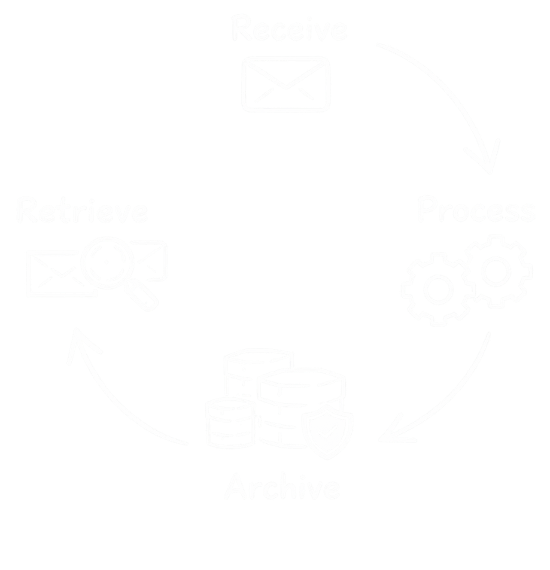
CampaignVault helps solve that by giving teams a central archive for outgoing communications, independent of the original sending system.
This page is for general information only and is not legal advice.
Why digital lending rules matter for message retention
India’s digital lending framework places strong emphasis on transparency, borrower communication, documentation, privacy, and operational accountability.
In practical terms, that means organizations should think carefully about how they store and retrieve communications related to:
- • key fact statements
- • sanction details
- • loan terms and conditions
- • policy notices
- • borrower notifications
- • recovery-related communications
- • privacy and consent-related messages
Even where the regulation is not framed as a simple archive rule, it still drives the need for reliable retention and retrieval.
The operational takeaway
A strong archive can help digital lenders answer questions such as:
- • What communication was sent to this borrower?
- • When was it sent?
- • Which channel was used?
- • Can we retrieve the exact content later?
- • Can support or compliance review it without depending on the original sender?
Those questions become especially important when dealing with complaints, audits, and borrower disputes.
Why this matters commercially
A dedicated archive can help lenders and lending platforms:
- • improve borrower complaint handling
- • reduce time spent gathering records from multiple tools
- • support internal audit and compliance review
- • maintain communication history across vendor changes
- • create a stronger operational record of borrower interactions
This is where CampaignVault can be valuable. It gives organizations a central archive for outgoing communications, helping teams retain and retrieve sent messages without relying only on the original campaign or notification platform.
What a digital-lending-aware archive should support
Organizations often look for an archive that can:
- • store outgoing borrower communications centrally
- • preserve message content and key metadata
- • support search by borrower, date, channel, or reference
- • maintain secure access controls
- • provide auditability around access and retrieval
- • support long-term retention policies
Common mistakes
Common issues include:
- • leaving important borrower messages inside individual vendors only
- • not keeping the final version actually delivered
- • separating support and compliance access from the archive entirely
- • lacking a consistent retention policy for borrower communications
- • failing to think about privacy and access controls for retained messages
Related guides
For broader context, see:
- • Message Archiving Laws for Outgoing Bulk Messages: US, UK, EU, Canada and India
- • UK Durable Medium Rules and Archived Customer Messages
- • GLBA and Message Retention: Storing Customer Communications Safely
FAQ
Do digital lending rules create a direct archive obligation?
Not always in a simple standalone way. But they create strong operational reasons to preserve and retrieve borrower communications reliably.
Is this only relevant to lenders?
It is most relevant to regulated entities and service providers involved in digital lending workflows, but similar communication retention issues can arise in adjacent financial services contexts.
Why use a dedicated archive?
Because borrower communication history often needs to outlive the original messaging tool. A dedicated archive supports continuity, retrieval, and governance.
Final note
India’s digital lending environment makes reliable communication retention more important, not less. If borrower-facing messages matter for transparency, service, and compliance, they should be retained in a way that supports future retrieval.
CampaignVault helps organizations create that operational archive for outgoing borrower communications across email and other channels.